You’ve got to love the BBC, at least for their legendary (and sometimes funny) impartiality.

http://news.bbc.co.uk/1/hi/technology/10506482.stm
.
You’ve got to love the BBC, at least for their legendary (and sometimes funny) impartiality.
http://news.bbc.co.uk/1/hi/technology/10506482.stm
.
Scotland is famous for its weather probably all over the world. I don't think there are many places which can boast about worse weather conditions than here.
So what is the weather like here? In short, it depends. Unlike in much of mainland Europe, you don't really see clear distinctions between different seasons when it comes to atmospheric conditions. It's true that the skies are (almost) never clear in winter as opposed to summer when it can be sunny sometimes even for several consecutive days, but temperatures rarely rise or drop significantly. If you don't like heat, you'll most probably find the Scottish summer pleasant but if you, like me, love the sun, go further south, preferably until you reach the Mediterranean.
Because summers are so short and almost negligible in comparison to the rest of the year, and winters are not true winters like I used to know them, I like to say that there are only two seasons here - light and dark. I think naming them like this is more appropriate.
It was the longest day of the year just a few days ago and, although the sun was below the horizon, it didn't get dark until after midnight, and only then it wasn't long (about three hours) before it got light again. Combine this with temperatures in the 20s and you're in for a lovely experience.
Wintertime, I'm afraid, is quite a different story. Long dark hours and almost constant rain and wind can really make you depressed.
The weather here is also very changeable. Some say that there can sometimes be all four seasons in one day. I personally wouldn't go as far as that but it is true that after a warm and cloudless morning, the sky can become completely clouded and temperatures can plummet rapidly only to go back to how they were just a few hours earlier.
Poles went to polls
I don’t know about others but Poland is a pseudo-democratic state. And not because until fairy recently we had a communist government but because we do what, I think, every other European democracy does – publish opinion polls before voting. To explain why I think it’s wrong, I’m going to use this year’s presidential elections as an example.
If you’d asked the citizens whom they were going to vote for in the next presidential elections back when the late president Kaczyński was alive and in office, many wouldn’t have the lightest idea whom they would like to be the next head of state. Even if they’d known the names of the candidates, they’d still struggle to name one they would’ve supported. Only after watching the debates and becoming more familiar with the candidates, could the people make up their minds and vote according to their political views. However, that wasn’t the case. Almost as soon as we knew we were going to have to vote, a number of polling companies published the results of their studies. Those polls showed that basically only two candidates were serious contenders (Kaczyński’s twin brother and Komorowski). From then on, many of those who’d been inclined towards voting for a certain candidate or weren’t sure who to vote for, realised that it didn’t matter anymore and that they’d have to vote for one of those two if they didn’t want their vote to be ‘wasted’.
I think such polls are a more powerful and cheaper tool in influencing people’s voting than the politicians’ multimillion euro campaigns.
Now, it may be true that a politician as dull as Komorowski would’ve still received the greatest share of votes even if there had been not polls published but I also know that the few people I’d spoken to told me that they weren’t going to vote the candidates that suited them most but for one of the two main ones.
For a short while even I considered that but in the end voted according to my conscience and my political views.
The weather was very pleasant today so I decided to walk instead of taking the underground to get to the polling station to cast my vote.
Govan Road
I must have photographed these buildings at least a hundred times
Das volle Leben
My retouching skills are abysmal but I’m slowly beginning to learn by experimenting
Yet another appalling act of vandalism
In front of Kelvingrove Museum where I lay on the grass waiting for Paulina
.
The second Semi-Final was nothing good. As with previous show, I watched it on the internet on CyBC live stream TV. Although I didn’t enjoy most of the songs, I loved the moment when Cyprus was announced as one of the qualifiers: the Cypriot presenter shouted KYPROS!, managed to say a few words and started crying. That’s the spirit.
Israel and Ireland were the two songs which I quite liked and they too managed to qualify. About the rest, I couldn’t care less.
The first semi final of this year’s Eurovision has just finished and, in my opinion, the results were as big a disappointment as the logo here.
Seventeen songs competed for ten places in the final, among those seventeen, I had four favourites that I wanted to qualify and out of those four, only ONE made it to the final. I’m very puzzled as to why people cast their vote on some very mediocre, boring and bad songs.
I’m actually quite fucking pissed off.
Instead of Moldova, Belgium and Albania there should be Slovakia, Finland, Poland! Shitty pop songs should be banned, we’ve had too many of them in the past few decades. Oh, and I’m not really looking forward to the second semi final in two days ‘cause none of the songs that will be performed is to my liking.
In short, tonight’s show has left be with a bad aftertaste.
Boooooooooo!
And here are the songs I liked but which others didnt:

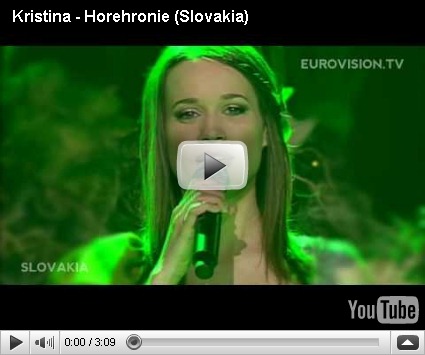

.
I was going through this website (http://www.theworldflag.org/) and found some gross and serious errors there. I can understand these inaccuracies if the site was created by volunteers/amateurs but if it wasn’t, if it’s a product of people who got paid for making it, then I’ll be once again pissed off at how unprofessional some people can be.
It’s doing my head in that I can’t seem to find a normal job while so many incompetent individuals are in employment and are doing work they shouldn’t be doing. Ach…
Finland:
- Native Languages
English (official), Finlandan (official), Hindustani
- Climate
Tropical marine; only slight seasonal temperature variation
I’ve no idea when Finnish became known as ‘Finlandan’ or when English became an official language of Finland. What I can congratulate the Finns on though is their new tropical climate. I’m sure they like it better than the old one which was cold and miserable.
Belgium:
- Native Languages
Belgiumian, Russian
Isn’t this a nice attempt at resolving the linguistic issue dividing Belgium? Do away with French, Dutch and German and create a new language for a new Belgian identity – Belgiumian. Only I wonder what’s Russian doing here.
Monaco:
- Capital City
Chisinau (Kishinev)
The United Kingdom doesn’t appear to be a country anymore. Instead, after you click the UK flag, you will be taken to the site about ‘Great Britain’. Moreover, among the many world’s flags, there are the ones of England, Wales and Scotland and, what’s interesting, no flag of Northern Ireland. But look how nice it is: Scotland got its independence without dissolving the Union and the situation in Northern Ireland has been resolved by eliminating the region altogether. I say well done!
Wales:
- Native Languages
Welsh
What about English? They mention it on several instances even when giving information on countries where English is only taught as a foreign language but didn’t bother to write it with regards to a country where the majority of people speak it?
Albania:
Shqipërisë
I thought there was something fishy about this name and I was right. It’s either Shqipëri/Shqipëria or Republika e Shqipërisë
Some countries have lost parts of their territories (oh well, that happens too):
Ukraine (Crimea)
Australia (Tasmania)
Turkey (European part)
And finally, something that should never happen on a website that claims to be devoted to flags:
.
A concerned reader asks:
“Is it a sin to look at women in my workplace? Is it a sin to greet women? Sometimes i dont greet them when i see them and i feel that they think i am rude. Doesnt this give them a bad impression of me? How should a muslim man conduct himself when dealing with a women at work?”
A ‘learned’ Muslim ‘scholar’ provides an answer:

and Allah Ta'ala Knows Best
Mufti Ebrahim Desai
FATWA DEPT.
“Nabi (Sallallaahu Alayhi Wasallam) said, 'A person does not seclude himself
with a woman except that the third one is the Shaytaan.' (Targheeb part3
pg.38).
It is, therefore, extremely important for a person to exercise great
precaution in getting into contact with strange women. You should avoid it
under all circumstances. Rather, you should seek alternate venues or make
some type of agreement with the woman so that you do not clash or come into
contact with each other.”
This is no joke. I didn’t make it up (I swear to Allah), it’s a genuine question and answer.
I’m lost for words. Honestly, how stupid (or brainwashed) can people be?

Niestety, z ta promocja mogą korzystać użytkownicy telefony od firma Nokia, działające w sieć operator komórkowy Orange.
O co do cholery chodzi? Po wpisaniu w google “od nokia” pojawia się mnóstwo wyników!
I’d been wanting to visit Loch Lomond for far too long and I’d never had the opportunity. Well, I’ve finally done it! I don’t think I would’ve ever gone there had it not been for Paulinka and Paweł. They took me there on the a few days ago, we spend the night and went back home the next day. That’s in short. The longer version goes more or less like this:
We agreed to go on Wednesday, 5th May. The day was pleasant with occasional spells of sunshine, I took the underground to meet them in the West End and from where we drove (in Paweł’s car) to Lidl to get some supplies (food and cheap German beer). Not long after we’d left Glasgow, the landscape became charmingly Scottish: vast open space with narrow, meandering roads and dotted with old houses.

Scotland on a sunny day
After a not so long journey interrupted by one stop at a bank and another at a shop, we reached the loch. At first it, the shore looked terribly crowded. There were a few campsites, yacht marinas and what not. We drove a bit further north along the right (eastern) shore until a suitable parking spot could be found.
No parking? So what?
So, the plan was that Paulinka and I would continue the route on foot and Paweł would go to the hostel by car as he needed to be there earlier because he was working. We only had several minutes before Paweł would leave us but before that happened, we all drank some beer and spend the time sitting on the rocks and talking.
Paweł’s last piece of advice was that, to find the hostel, we just needed to made our way along the shore. And then he drove off.
No later than after 10 or 20 minutes did it turn out that he should’ve said ‘follow the trail’.
It was the first out of many times that found ourselves in a difficult terrain. A huge rocky wall loomed out of nowhere in front of us, forcing us to climb up a steep hillside.

But it wasn’t too bad ‘cause the view from the top was, yet again, beautiful.

Yes, the scenery was really nice and for this (and some other) reasons, we took a break far too often. One time as we were resting, a duck came towards us. It probably wanted to be fed but we had nothing to give it except for crisps. I guess Paulina thought it was a good idea to feed the duck with crisps and that’s exactly what she did. More birds soon joined the feast.
Loch Lomond ducks enjoy crisps
The views were simply breathtaking (am I repeating myself?)
After walking for another hour or so, Paulinka announced that she knew where we were and that it was very close to the hostel. Without hesitation, I smoked a ‘victory cigarette'. Afterwards, the road got almost impassable. The footpath had disappeared and because it was very difficult to go on, we were forced to climb up a steep slope while avoiding getting caught in thorny bushes. At the top, we realised that we had no idea where were were and how to get back on the trail. The only way out of there led several metres down again onto a flat area which then turned out to be a bog. Our feet got wet and muddy but we kept up our spirits (we even made some silly video clips but I’m not going to publish them!). We reached the shore again and though it best not to lose sight of it ever again. It was time for another break, especially that it had got colder and we needed to put some more clothes on and to have something to drink and eat. If I now remember correctly, there was only a can of beer and some crisps, which Paulina ,thankfully, hadn’t given to the ducks, left.
As we were sat there, we saw something we’d never expected to see in that place. A human being! My initial thought was that we weren’t lost after all and that that route was frequented, albeit not very often. So I quickly rose to my feet and ran to ask him how to get back on the footpath. He said he didn’t know ‘cause he was lost too! Although he looked a bit Spanish, he turned out to be a German guy travelling around Scotland, mostly on foot. We offered him some beer and together headed in the direction of the hostel. The conversation went quite nicely and it wasn’t long before we started seeing first sings of civilisation.
After what was almost 5 hours since Paweł dropped us off, we finally managed to find the hostel. And even though we were really tired, we knew that the next day was going to be even more exhausting.
Looking for work is no easy task, especially if you’re as unlucky as I am. I know people whom works find, instead of them finding it. I haven’t been this fortunate, at all. I, despite sending dozens CVs and filling in a multitude of application forms, have not managed to find a proper job in months. The only time I thought I had something turned out to be work on a casual basis (which meant doing just a few hours a week on average).
Job hunting involves lots of frustration and disappointment, even more so in times like these. A few weeks ago, I attended a job interview for work at a warehouse with aquarium fish – the job was nothing great, looked rather boring and they only offered about 15 hours a week. To my surprise, the owner of the place told me that he’d received almost a hundred applications. Needless to say I didn’t get the job, not that I really wanted it but it would've been good to have something for the time being, but I was at least invited to the interview and after that got an email saying that 'my application was not successful at this time’. Unfortunately, it is rather the exception than the rule.
All too often, prospective employers don’t even bother sending you a small note to let you know they don’t want you to work for them. No thank you, no sorry, not even a fuck off, nothing at all, as if you don’t deserve to be contacted about your application after taking your time to write a covering letter and/or filling in their stupid application form and all those ‘kind regards’, ‘yours faithfullys’, ‘thank yous’ and ‘pleases’. I am tempted to write to them and teach them some decency but I’m not going to do it.
Another annoyance is the names and descriptions of jobs. While browsing all those adverts, you often come across names that are (at least for me) extremely difficult to decipher. Take this one for example:
Skills Development Specialist LEP
Description:
FPSG Connect are currently looking for a Skills Development Specialist with high levels of experience in delivering Contact Centre Training, to have the ability to identify training & development needs across several business areas, to design, source, deliver & evaluate all training & development programmes, ensuring all training mediums covered. Our clients have gone through a change period and the role will be to fully activate this to ensure that a seamless & continual enhancement of all training & development support is utilised for all operational staff.
That’s what I call ‘corporate gibberish’. It tells me absolutely nothing about the job except for one little thing: it’s exactly the kind of work I certainly don’t want to do.
For more ridiculous ideas some companies have had look here.
Why make things so difficult by using all these fancy words and risk losing intelligibility? I have no idea.
Anyway, tonight’s jackpot for Euromillions is £51,000,000! Wish me luck and I may not have to continue my job hunt after all :)
Smoke from Eyjafjallajökull, a volcano in Iceland that started spewing lava a few days ago, has paralysed almost all air traffic in the northern part of Europe. The huge, and apparently, invisible cloud of volcanic ash could be a serious threat to passenger planes and so the authorities have decided to close a big chunk of European airspace.
Terrible?
No. I might be becoming a cynic but I smile every time I hear new pieces of news about this situation. Of course I feel sorry for all those who can’t get back home or make an important visit but this media panic at the sight of empty airports, quiet skies and grounded aeroplanes is exaggerated. People seem to have forgotten that people travelled before the aeroplane, and we still do have trains, ferries, coaches and so on; so there are alternatives.
I think I’d be great if airtravel was next to impossible for months to come. It could result in lowering of train ticket prices and rising awareness of other modes of transport. I have for some time now wanted to make a journey from here to Poland but it was simply too expensive. Now things might change – trains may get cheaper or there may be no other way to go :)
Many people, I’m sure, would welcome going back to the romantic times when travelling meant travelling and not just getting from A to B.
So, Eyjafjallajökull, keep smoking!

When you go to Spain, you say you go to Spain. When you go to Poland, you say you go to Poland, when you go to Italy, you say you go to Italy. Simple, eh? Well, things aren’t so simple when it comes to this part of the world and for many reasons. So I’ve decided to write something about the multitude of different names that are used with these islands, this island, this country and this country (yes, twice :P). Sometimes, using the wrong name can cause offence to the person you’re talking to or expose your ignorance/lack of knowledge about the inhabitants of these North European islands. I shall start with the name with the broadest meaning, namely:
the British Isles
This is a strictly geographical term, not a political one and it refers to the archipelago comprised of two main islands: Great Britain and Ireland and thousands of smaller islands. You don’t usually say you’re going to the British Isles unless your destination are both of the main islands and maybe some smaller ones. I wouldn’t advise to use in contexts other than the weather or geography. The Irish from the Republic of Ireland aren’t too keen on the name as prefer calling the archipelago ‘Britain and Ireland’, 'the British and Irish Isles', ‘these islands’ or ‘these isles’ but that’s their problem :P
So far, we’ve established that there is a group of islands in the north of Europe inhabited by people and that these islands are usually called the British Isles. Now, does this mean that their inhabitants are called the British? Well, the answer is yes and no. Yes because the people living on the biggest island, aptly called Great Britain are called British and no, because those living on other islands are not necessary British. The reason being that they prefer to be called by their nationality (and preferably by their first name :P) And this brings us to the next matter, what countries are there in the British Isles? Basically speaking, there are two independent countries: the United Kingdom of Great Britain and Northern Island and the Republic or Ireland.
The United Kingdom of Great Britain and Northern Ireland
(fortunately, this is usually abbreviated to the UK) is the country occupying the whole of Great Britain, the northern part of Ireland, Outer and Inner Hebrides, Orkney Islands, Shetland Islands and the Isle of Wight. It is a (parliamentary) monarchy and the head of state is Queen Elisabeth II (long live the Queen!). The people who live there are called the British (even if some live outside of the island, such as those in N Ireland) and they are all citizens of that country and subjects of the Queen. Now, to complicate this already complicated matter, they refer to their country as the UK, United Kingdom, Great Britain, Britain and, occasionally, as Blighty.
Ireland
is the other independent state. It occupies most of the island of Ireland with the exception of the north (called Northern Ireland or Ulster) which is part of the UK. As you should have gathered by now, Ireland in the geographical sense is not the same as Ireland in the political sense (the former covering a bigger area). To distinguish the country from the island, you can call the country the Republic of Ireland (ROI).
Now back to the UK. Europeans from the Continent often make the awful mistake of calling the British citizens English. While it’s true that the majority of them are English, it is not polite (and sometimes even dangerous) to refer all of them as English. The UK, which is a country itself, is further divided into four countries or Home Nations. Thus we have
England, Wales, Scotland and Northern Ireland,
all of which have varying degrees of autonomy but are not independent. You can’t to, for example, Scotland and call the locals English, just as you wouldn’t go to Germany and call them Bavarians or to Spain and call them Andalusians. If you find it so hard to remember that the people of Scotland are called Scottish, of Wales are Welsh and so on, then what you can do is to call them collectively British. Very few people would mind that. However, because of the political situation in Northern Ireland, I think you should be careful and not to refer to a republican/nationalist as British, but as a foreigner you should be forgiven. The safest bet is to call the people N Ireland Irish, no matter what part of the island they’re from. Just don’t call them English, for goodness sake! Another faux pas that some people make is calling the Scottish people Scotch. You can call them Scottish or Scots but never do you refer to them as Scotch! This is only used for food and drinks of Scottish origin.
In addition to all these peoples and places, there are a few islands which can cause even more trouble to an unsuspecting visitor or anyone what thinks about them for a second. For political reasons, they are considered part of the British Isles in geographic terms (God, this is confusing) but are neither part of the UK nor independent states and are known as the Crown Dependencies (the UK is responsible for their representation on the international stage and their defence):
the Isle of Man is one of the British Isles as it lies between Great Britain and Ireland and
the Channel Islands (Jersey and Guernsey) are not a political entity and are independent of each other. They lie off the coast of France but because of their close ties with the UK they are usually considered part of the British Isles.
Here’s a small table with different names and their adjectives to explain everything once again:
| Geographical entity | ||||
| Name | Adjective | Notes | ||
| British Isles | British | only when talking about British wildlife, climate, geology and the like | ||
| British | same as above | ||
| Irish | |||
| ||||
| Political Entity | Vehicle registration code | internet domain | ||
| United Kingdom (of Great Britain and Northern Ireland), Great Britain, Britain | British | It should never be referred to as England | GB | .uk .eu |
| English (also Englishman, Englishwoman for people) | ENG (unofficial) | ||
| Welsh (also Welshman and Welshwoman for people) | British can be used as a generic term | CYM (unofficial) | |
| Scottish, Scot | Scotch is only used for products British can be used as a generic term | SCO (unofficial) | |
| Irish | British can be used as a generic term | NI (unofficial) | |
| Ireland, Republic of Ireland | Irish | IRL | .ie .eu | |
| Isle of Man | Manx | GBM | .im | |
| Jersey | GBJ | .je | ||
| Guernsey
| GBG GBA | .gg | ||
Ouffou...
What I’ve written so far is far from exhaustive so in my next notes I will try to write about different languages spoken on these islands, different money and politics.
If you find any inaccuracies, mistakes or you think that something could be added, email me or leave a comment below.
With a can of Tennent’s (which I got from my neighbour, oh bless her, for ‘saving’ her dog) standing on the table, I am now ready to write something about one thing that begins with an A and which, coincidentally, is alcohol.
When one thinks of Scotland, the first thing that usually springs to mind is whisky. The word whisky (etymology, here I go again!) derives from Gaelic uisge beatha which in turn is a translation of the Latin term aqua vitæ, meaning water of life, although aqua mortis would seem more appropriate (especially if consumed in excess). There are a few kinds of it (single malt and blended are the ones I’ve hear of but if you think that you’ll see people consuming this beverage on every corner, you’ll be disappointed. Although still considered the national drink of the country and despite the fact (or my opinion) that it is still one of Scotland’s main exports, whisky has had to give way to other types of alcohol. I’ve only had it once (back in 2005) and I thought it was horrid but I’m sure many people would disagree. So, Scotland is not a land flowing with just whisky and honey anymore and thank God for that. Many hectolitres of other alcohols are drunk each day.
Beer (ale and lager) is at the moment, I think, the most popular alcoholic beverage in the country and since everyone is familiar with it, I see no reason why I should comment on it further. I will only say that there’s one quite well-known lager from Glasgow – Tennent’s (I wrote well-known, although I’d never heard of it before coming here, I got this information from the said can on my table which reads: Made with pride in the heart of Glasgow (it’s actually made in the East End), but famous far beyond its home city – for a crisp taste and refreshingly clean finish. Ok, fair enough, I quite like Tennet’s.

An article from the BBC: Monks reject Buckfast wine link to crime in Scotland
Now, if you want to buy alcohol in Scotland, you need to go to almost any supermarket, newsagent’s or an off licence but be sure to do it between 10am and 10pm and the law says that alcohol cannot be bought from shops outside these hours.
Ok, I think that’s enough, for drinking alcohol is much more fun than writing about it :P

Dawno tak się nie uśmiałem. Powiedzcie, że Wasz też to śmieszy, bo ja nie mogłem się opanować przez dobrą minutę :)

So, I've just come back from the cinema where I saw one of the most talked about films this year - Avatar. Having heard a few people's opinions, I must say I didn't expect the film to be much more than some nice special effects, a mediocre plot and a tribute to sex equality and political correctness (by the way, who the hell came up with the phrase 'gender equality'?!).
But let's start from the beginning. The ticket, with a student discount, was £6.30 which was much cheaper than that I paid last time I went to see a film in 3D (The Final Destination - one big shite) in Edinburgh but I also had to pay extra for the glasses which, judgeing by the number of new films coming out soon in 3D, I will have to keep. Initially, my eyes got quite sore and even watered a bit (something that didn’t happen when I was watching the previous film in 3D) and I was quite worried I wouldn’t be able to watch comfortably but they soon adjusted and the pain eased off. I know I’m not going to write anything revealing but there you go. Just some chaotic, random thoughts.
I knew what the film was going to be about so I wasn't surprised at all when it turned out that the killer 'savages' from the forest were actually the good guys; but even this knowledge didn't reduce my enjoyment of the picture.
So yeh, the plot... Unlike many people who have seemed to indulge in criticising it, I thought it was great. Adventure, clash of civilisations, good versus evil, love, betrayal - these are timeless themes that have been known for millennia to be components of many great works and they certainly added value to this film. You cannot make a bad film about these things, can you?
When you first see the human technology, you can't help but admire the sophistication and advancement. The shiny metal, computer screens, engines and so on look very close to home but the more time you spend with the Na'vi, you become more hostile to technology and more appreciating of their way of life and the strong bond they have with nature. At least that's how I felt. The Na'vi were amazing. Their behaviour and character in many ways resembled those of humans but at the same time there was something noble and, despite their lack of using advanced technology, something, erm..., advanced. Their religion, if it was a religion, a subject of yanks’ mockery, made so much more sense than human made up beliefs. It was embarrassing to see people, who believe in an invisible man because some ancient books say that he exists, laugh at a civilisation which believe in and have proof for existence of a benevolent force or deity which they call Eywa.
The yanks were the baddies in this film (finally a picture where they don’t save the world from an asteroid/comet/alien invasion/deadly virus and what have you). And after the destruction they had caused, it was really satisfying to see them having their arses seriously kicked. Their corporate greed, illusion of superiority, general stupidity and a bit of bad luck led them to their ignominious fall.
Now about the special effects. There isn’t much to say apart from: WOW. And I meant it, they were very impressive, the colours, especially those of bioluminescence, were delightful, the whole world of Pandora looked very convincing and the scenes of riding animal, chases, falls and battles were breathtaking. The only negative comment I want to make is that sometimes certain objects looked blurred but I think that might have been due to my eyes not fully adjusting to watching films in 3D.
The music was great too, at one point it even resembled music from the Terminator (which, for those you don’t know, was also directed by Cameron). If anyone knows the title and the singer of the song that was played at the end, please write in the comments below.
The only flaw of the film that I can think of is that the fauna (including the Na’vi) and flora looked too earthly. I don’t think it’s possible that evolution on other planets or moons could have gone almost the same direction as evolution on Earth, I mean, come on, the Na’vi were mammals! But I don’t care, we’re used to watching films set in ‘galaxies far, far away’ were the main species look just like humans and where English is the most widely spoken and understood language :)
If I had a choice between living here or living with the Na’vi, I wouldn’t hesitate one moment and say: take me there!


